Gabbro Developer Portfoliov1.0.4
Use this Skill to build a product website.
- Yours to keep: the files stay on your computer.
- Payment by Waffo Pancake, our merchant of record.
- 38 free Skills to try first
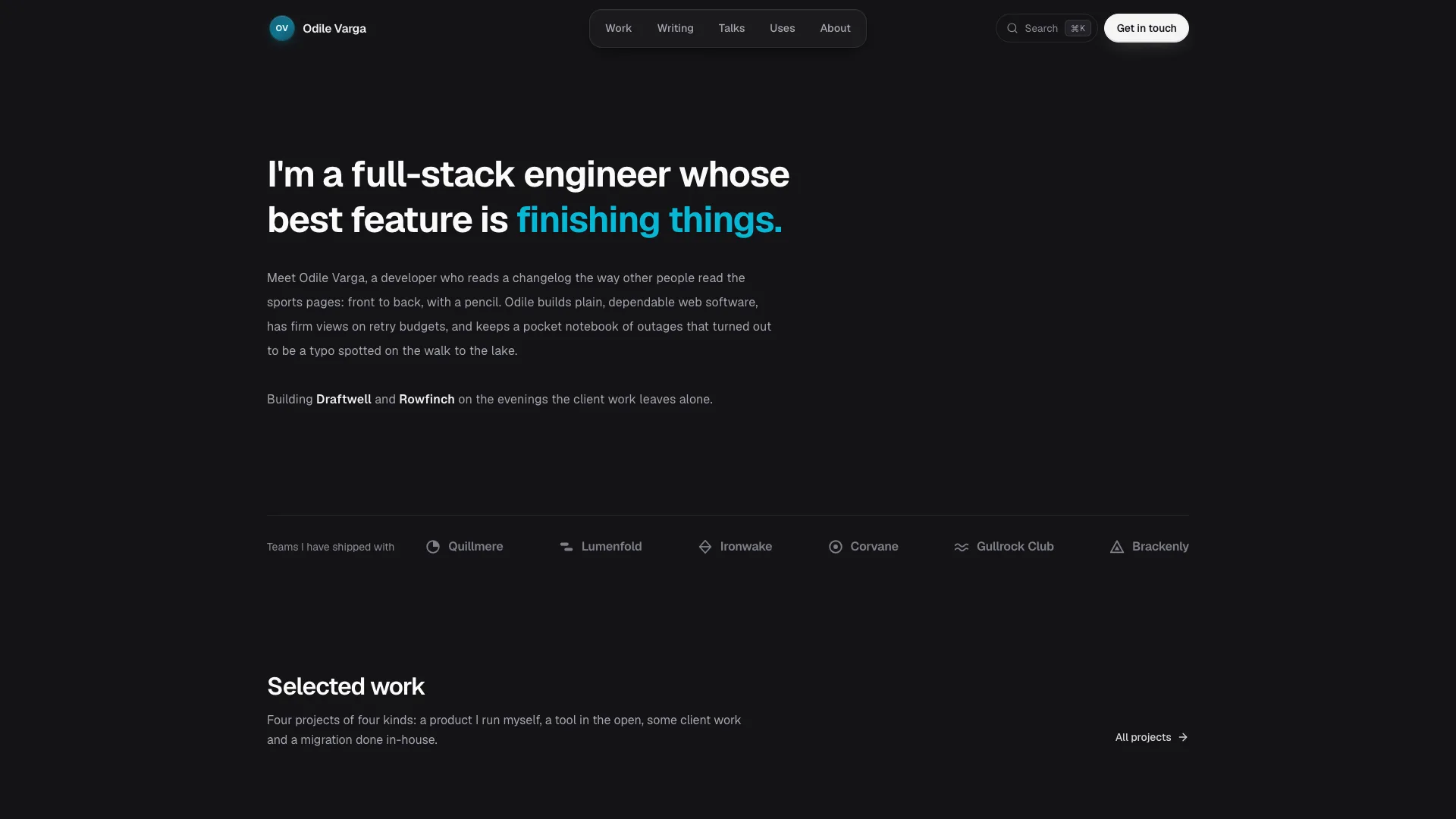
A developer portfolio skill for Claude Fable 5: a dark site with one cyan accent, project write-ups with HTML-drawn product screens, plus writing, talks, uses, a resume and a contact form.
Updated Nov 7, 2026
Preview gallery


Similar Skills
View all
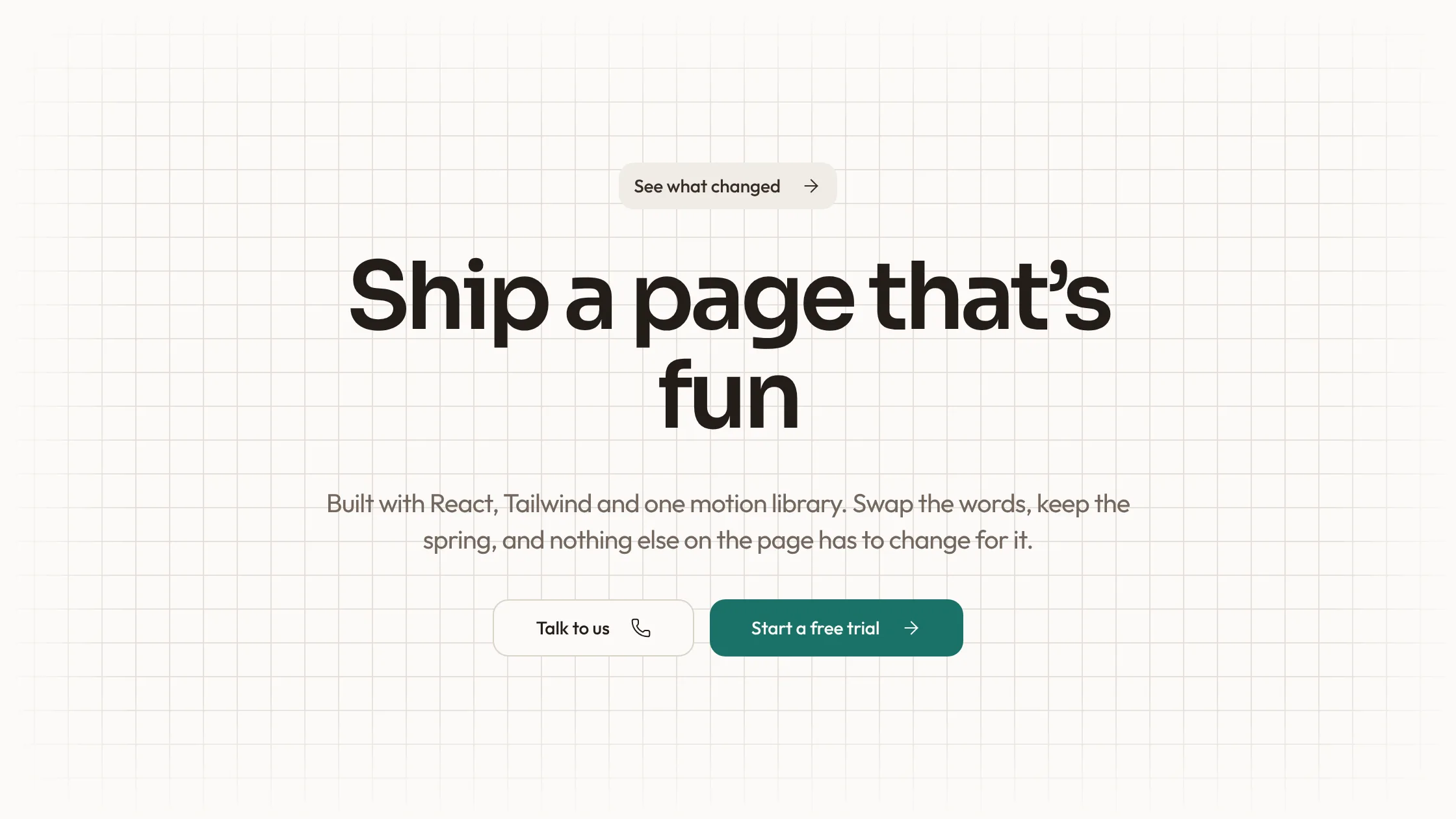
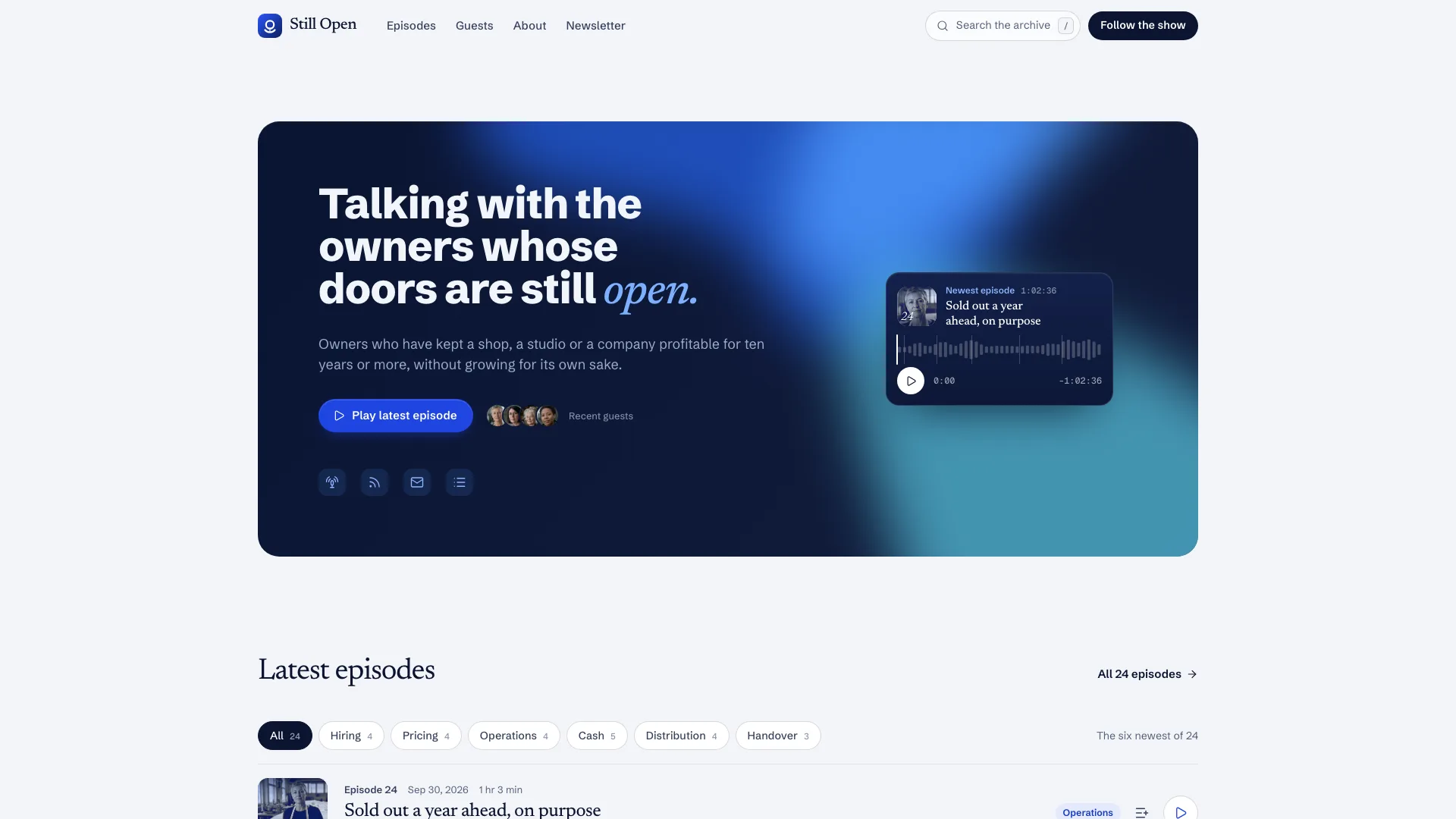
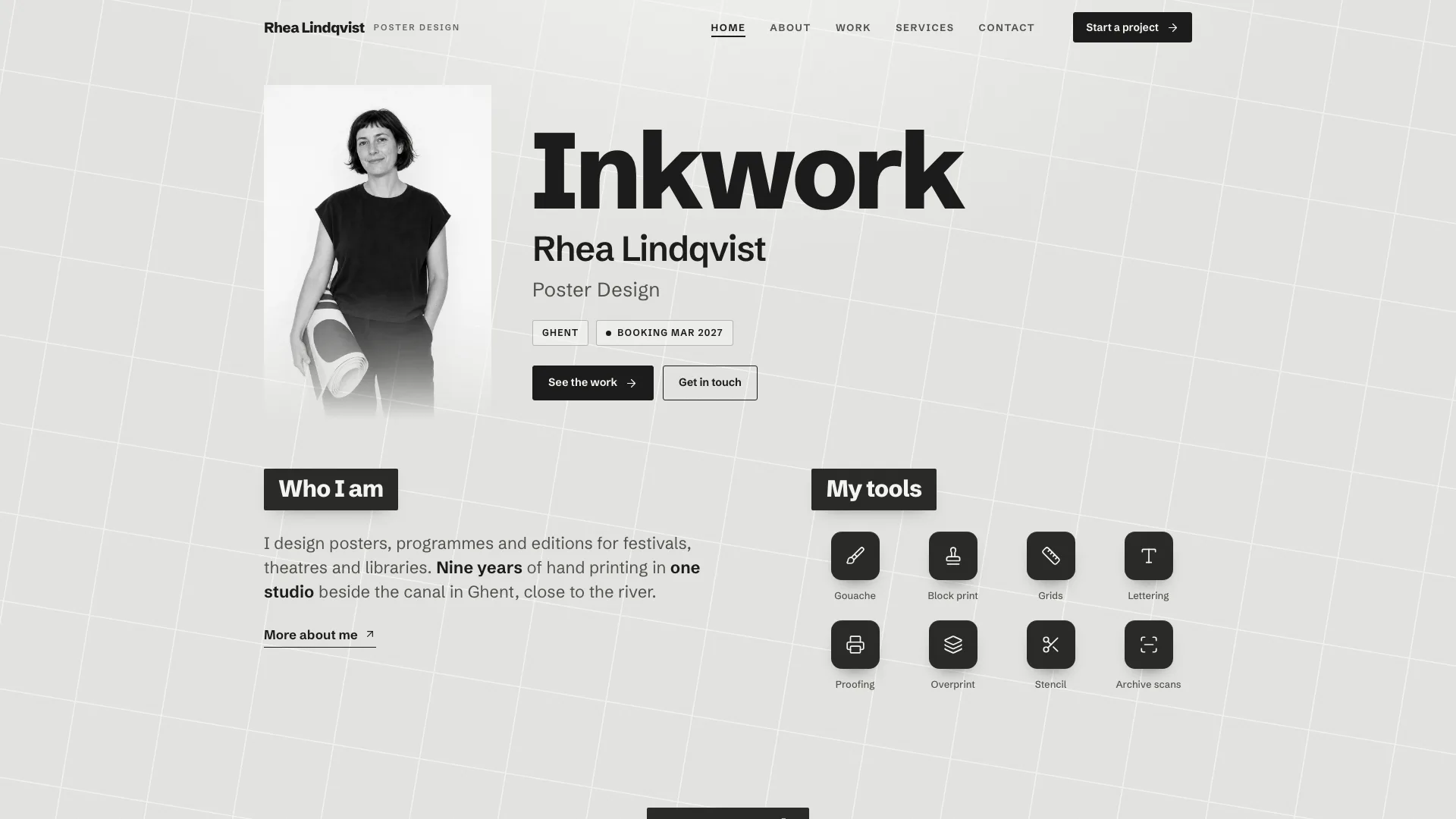
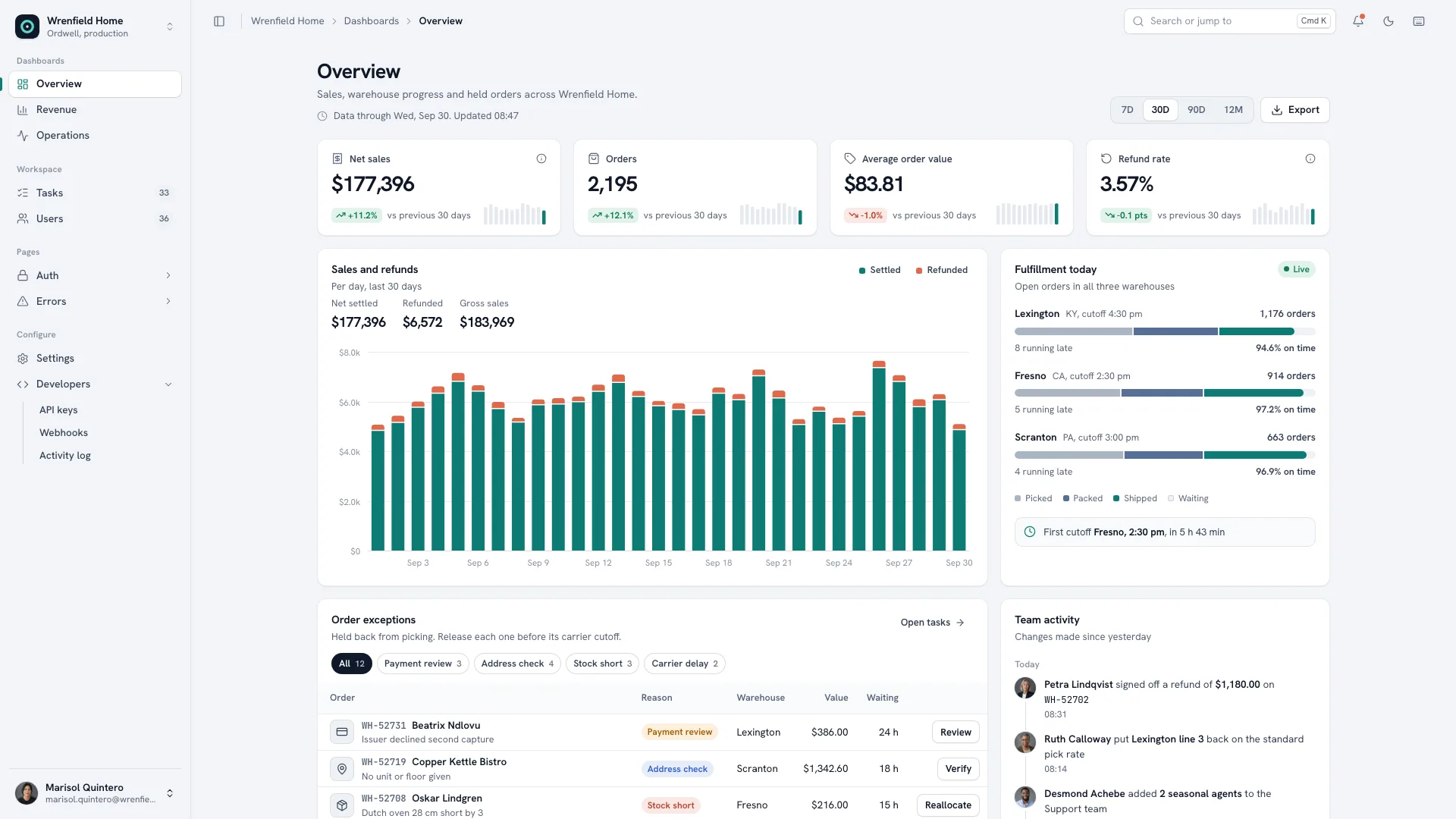
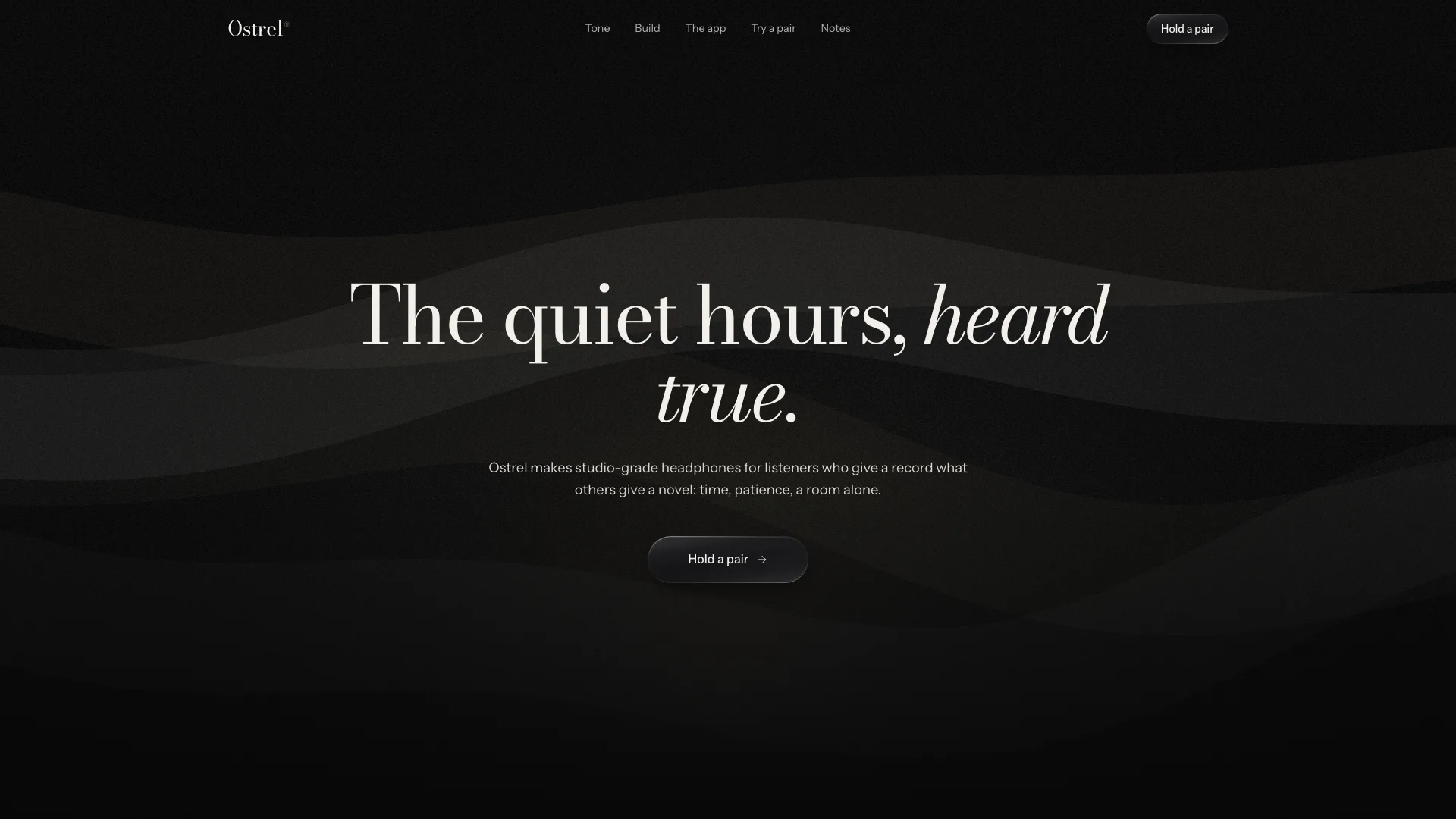
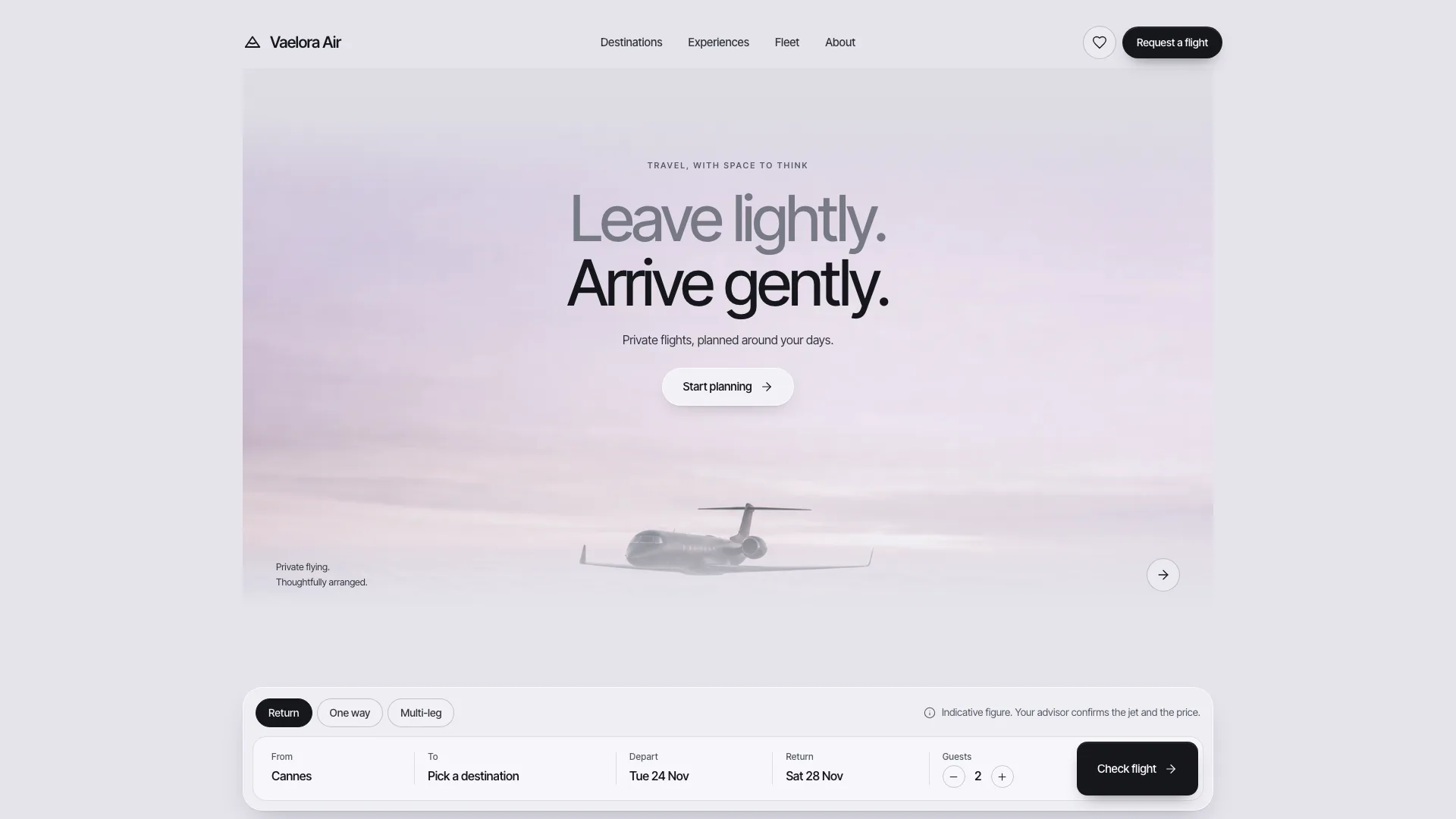
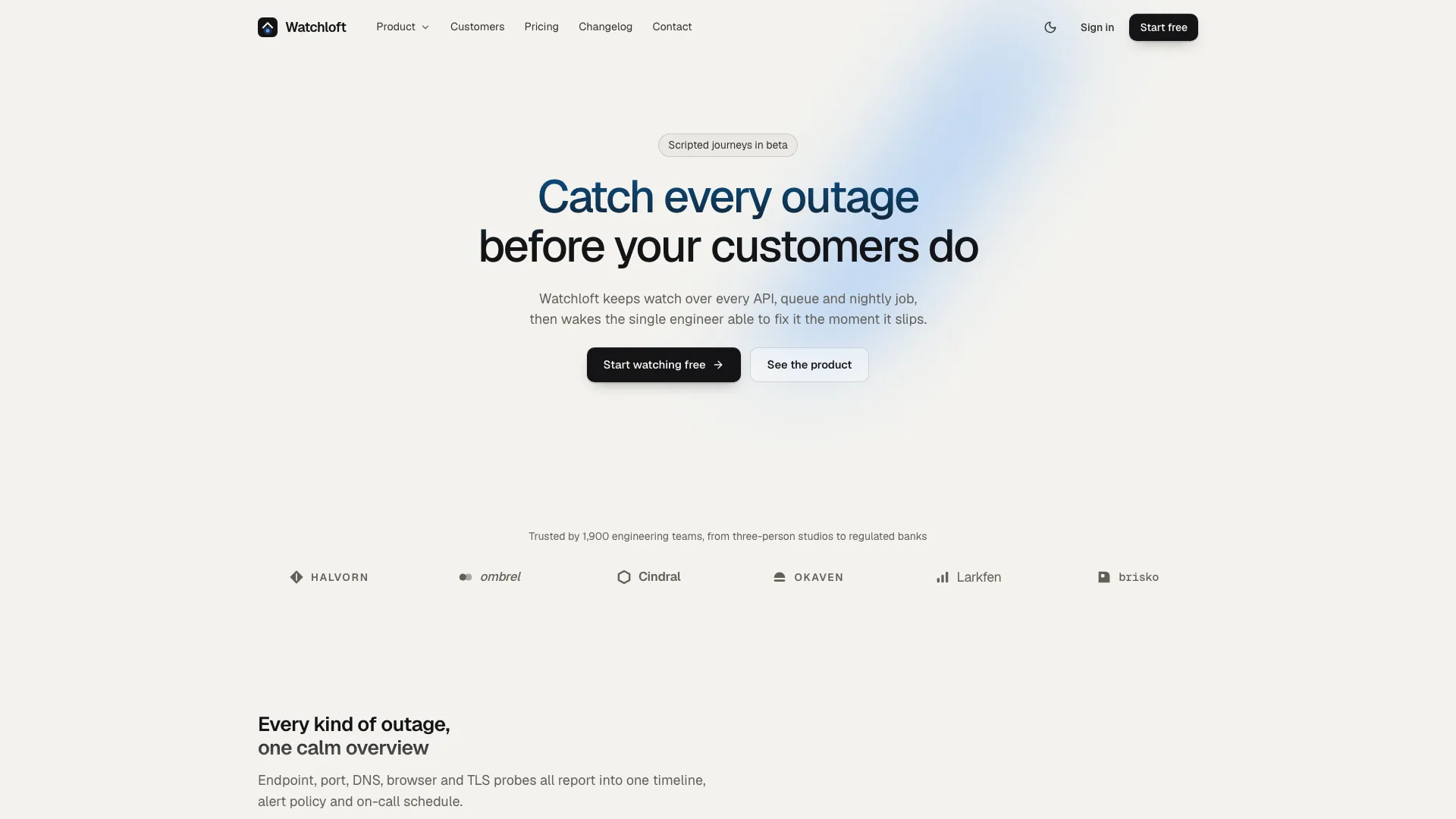
What you get
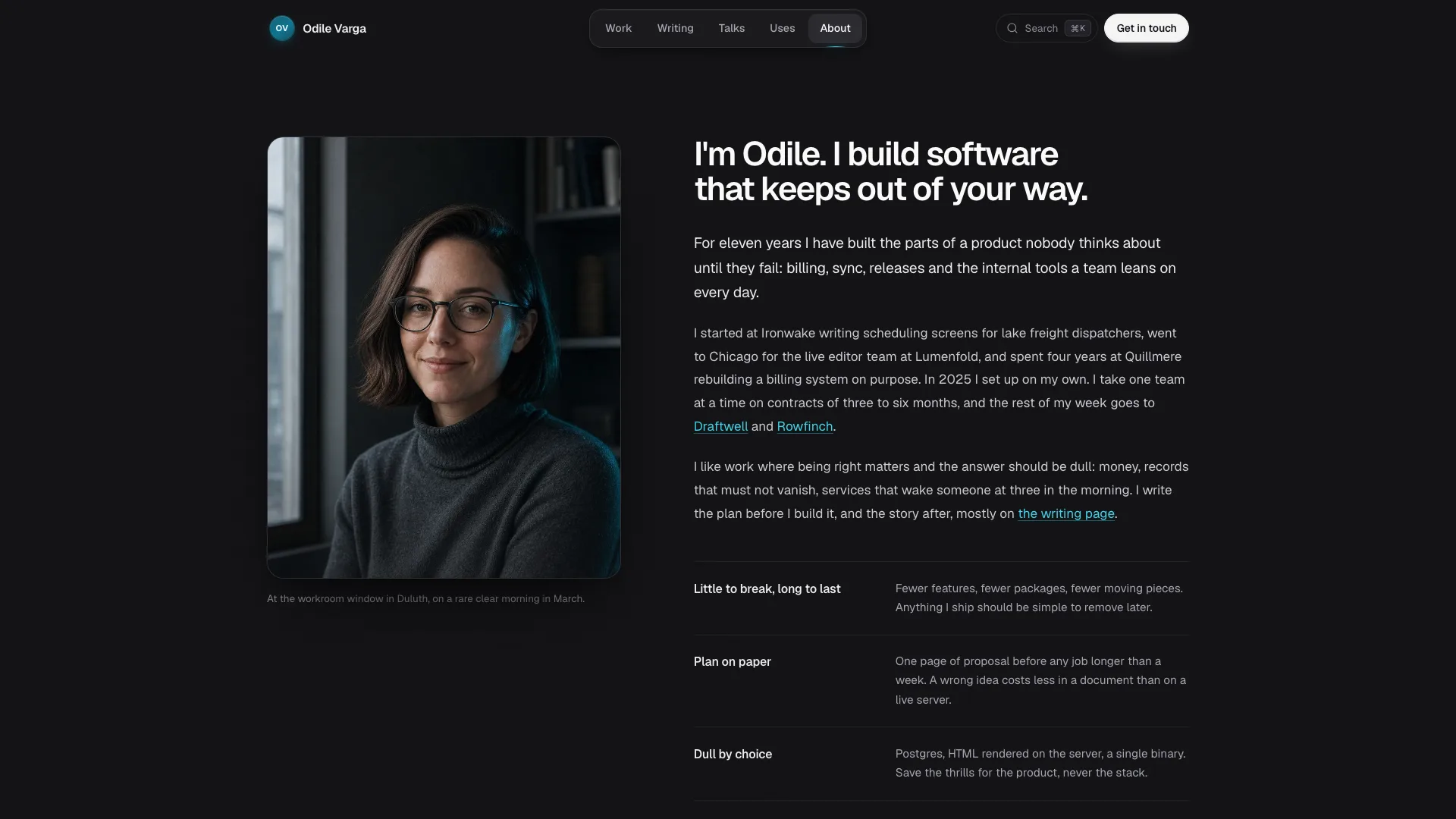
- Eleven views around an invented developer named Odile Varga: a home page, four case studies and an archive under work, five articles, talks, a uses page, milestones on about, plus resume, contact and 404.
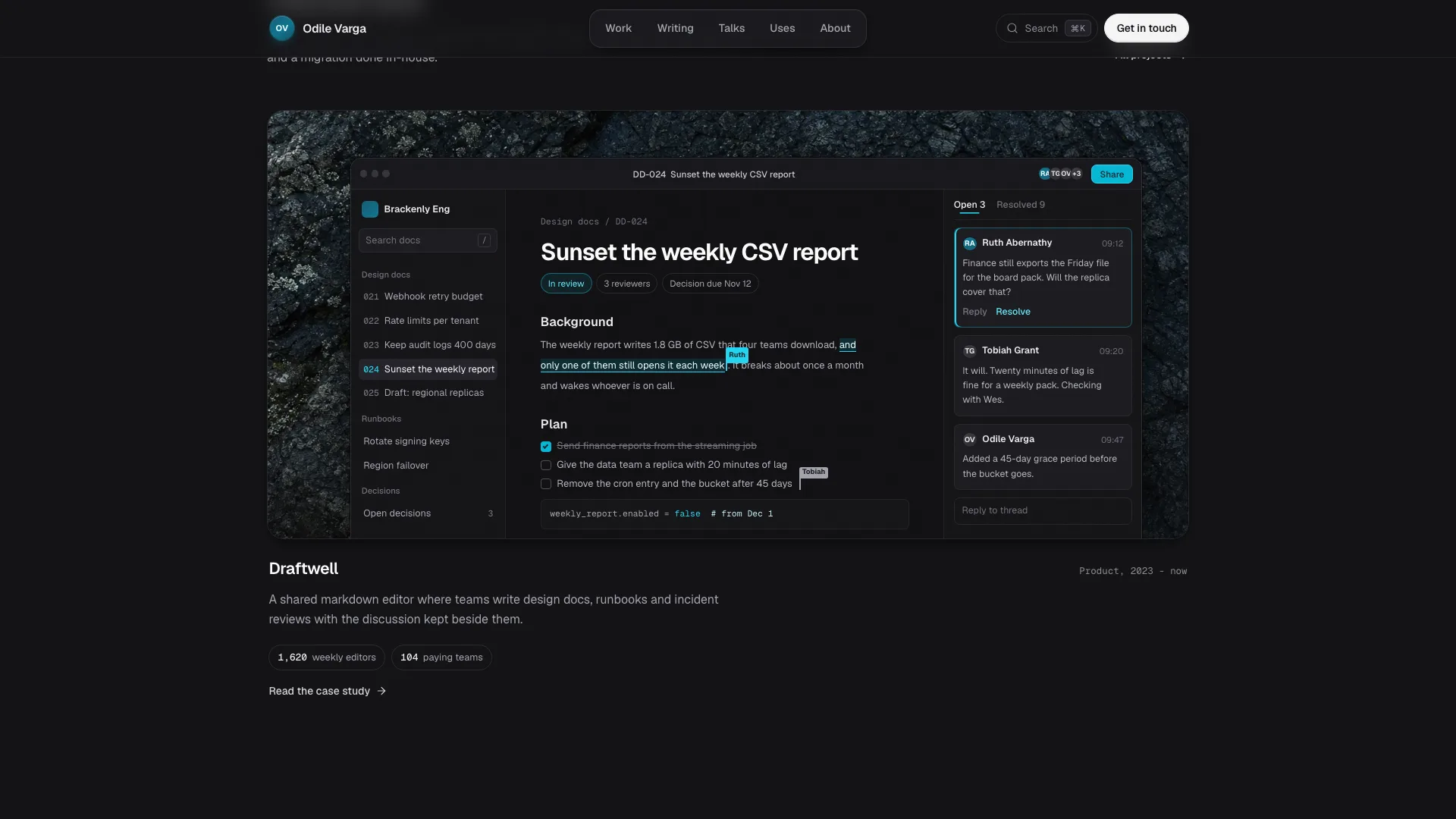
- A product window built in the page for each project, so covers stay crisp and selectable, shown in four card shapes over four stone backdrops.
- Interactive parts in place: a command palette, employer tabs, Show More, filters and search for the archive and writing, notes under talks, copy buttons and a contact form that shows each state.
Good fit
- Backend, frontend and full-stack developers who want writing, talks and project write-ups at one address.
- Freelancers and indie makers wanting a site that says they can be hired, with availability and a working contact form.
- Job seekers presenting open-source work, side projects and a one-page resume as one body of work.
Not for
- Bright, colorful personal brands: the design is dark only, with a single cyan accent.
- Sites that need live star counts or posts from a code host; repository figures are written into the page.
- Receiving messages from day one: until you connect a backend, the form just shows a confirmation.
About this Skill
Gabbro Developer Portfolio is a portfolio website skill for Claude Fable 5, for developers who want one calm address for everything they have shipped. Near-black stone and a single cyan line set the mood. The home page leads with one dry sentence, then four case studies, an experience rail, open-source work, recent posts and talks. Every project opens as a full case study.
How it works
- The agent collects your roles, projects, posts, talks and tools, or drafts what is missing in your voice and lists it for your approval.
- It replaces the sample arrays at the top of the page and the static copy until no sample name remains.
- Each project gets a product window suited to your field, and the imagery is planned around your own portrait and talk photos if you have them.
- It builds a single offline file, then the validator runs and every route is clicked through at four widths before delivery.
Checked before delivery
- validate-portfolio.mjs passes on the built file: one file, no remote requests, one h1 per view, every #/ link, project and post resolves, one cyan clause in a text-only hero, no sample name left
- Tabs, Show More, filters, search, the palette, dialogs, copy buttons and both forms work at 390, 768, 1024 and 1440 px and inside a sandboxed frame
- Employers, clients, quotes, star counts, talks and dates are the user's, drafted entries are listed in the closing message, and no award or certification is made up
What you need before you start
- You bring
- Name, one-line role, city and time zone, availability, a two- or three-sentence bio with one personal detail, email and profile links · Two to four employers (role, dates, place, two to four results, stack), two to six projects (problem, constraints, three decisions, results with numbers, a quote, a reflection), small repositories, posts, talks, uses and milestones by year · Your own portrait and any real talk photos if the site is real; otherwise the agent's image tool makes stand-ins
- Dependencies
- Node.js 18+ on the machine running the agent, to pack the offline file · An internet connection during the build, so both fonts are fetched once and embedded · Optional: an image generation tool for the backdrops and stand-in photos
- Outside costs
- None
- Last tested
- v1.0.4 — Claude Code / Codex / Cursor
User reviews
Loading reviews…
FAQ
What format does it ship in?
A single offline file with its fonts and pictures embedded, which opens in a browser or a sandboxed preview. In a framework project, or if you ask, the agent rebuilds those routes and components in your stack.
Are the covers real screenshots?
No. Every cover is a product window built in HTML and CSS over a stone backdrop, so the agent can fill it with details of your work and it stays sharp at any width.
Do the photos need to show me?
On a real site, yes: supply your portrait and any genuine talk photos. The generated faces are only stand-ins, and with no talk photos the talks fall back to slide or waveform thumbnails.