Explorable System Mapv1.0.0
Use this Skill to build an interactive system map.
- Yours to keep: the files stay on your computer.
- Payment by Waffo Pancake, our merchant of record.
- 38 free Skills to try first
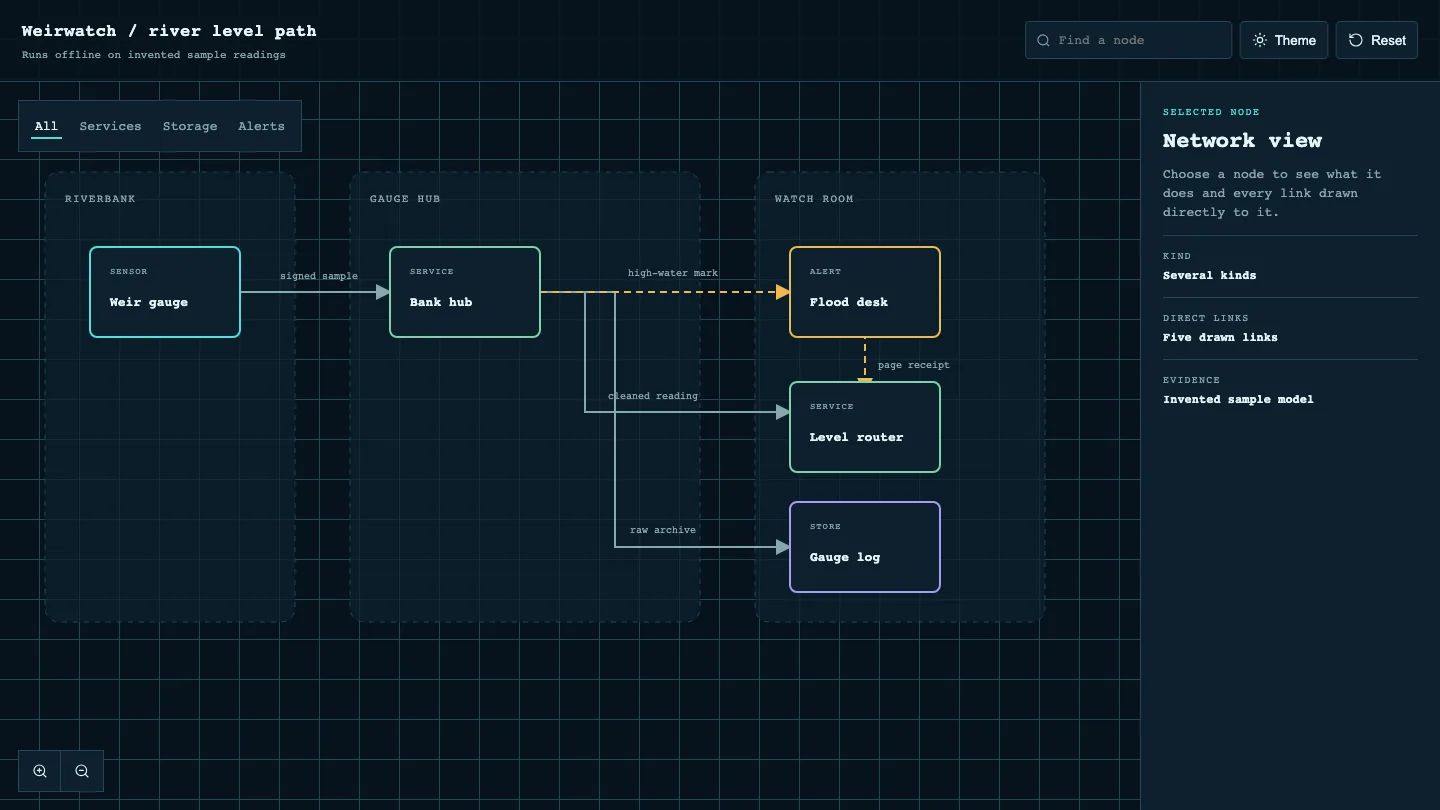
A system architecture map skill for Claude Fable 5: a description, repo evidence or typed node list becomes one offline map you can search, filter, zoom and inspect.
Picked most often by
Updated Nov 6, 2026
Preview gallery


Similar Skills
View all





What you get
- A single offline map with one obvious main path, each node and edge typed, labeled and placed.
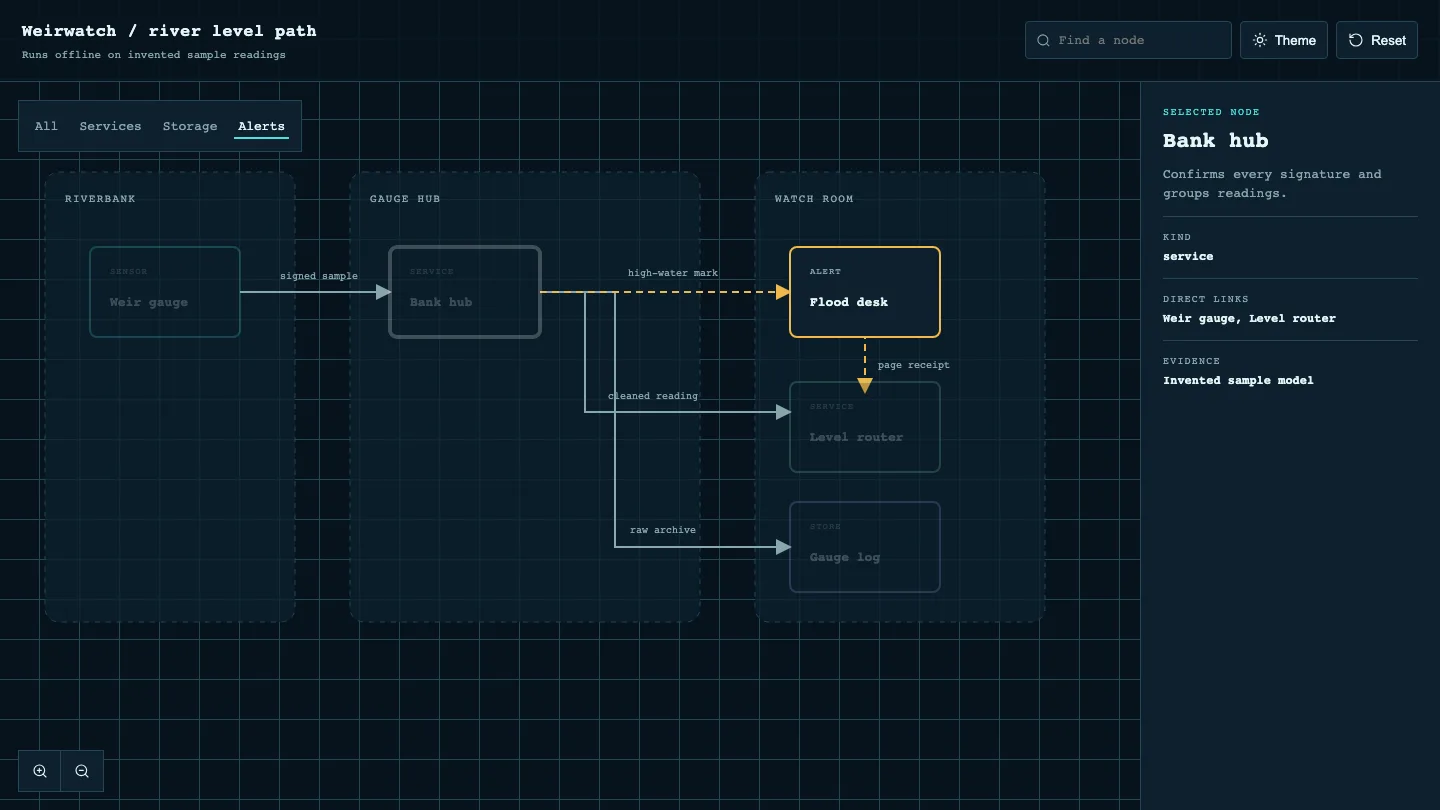
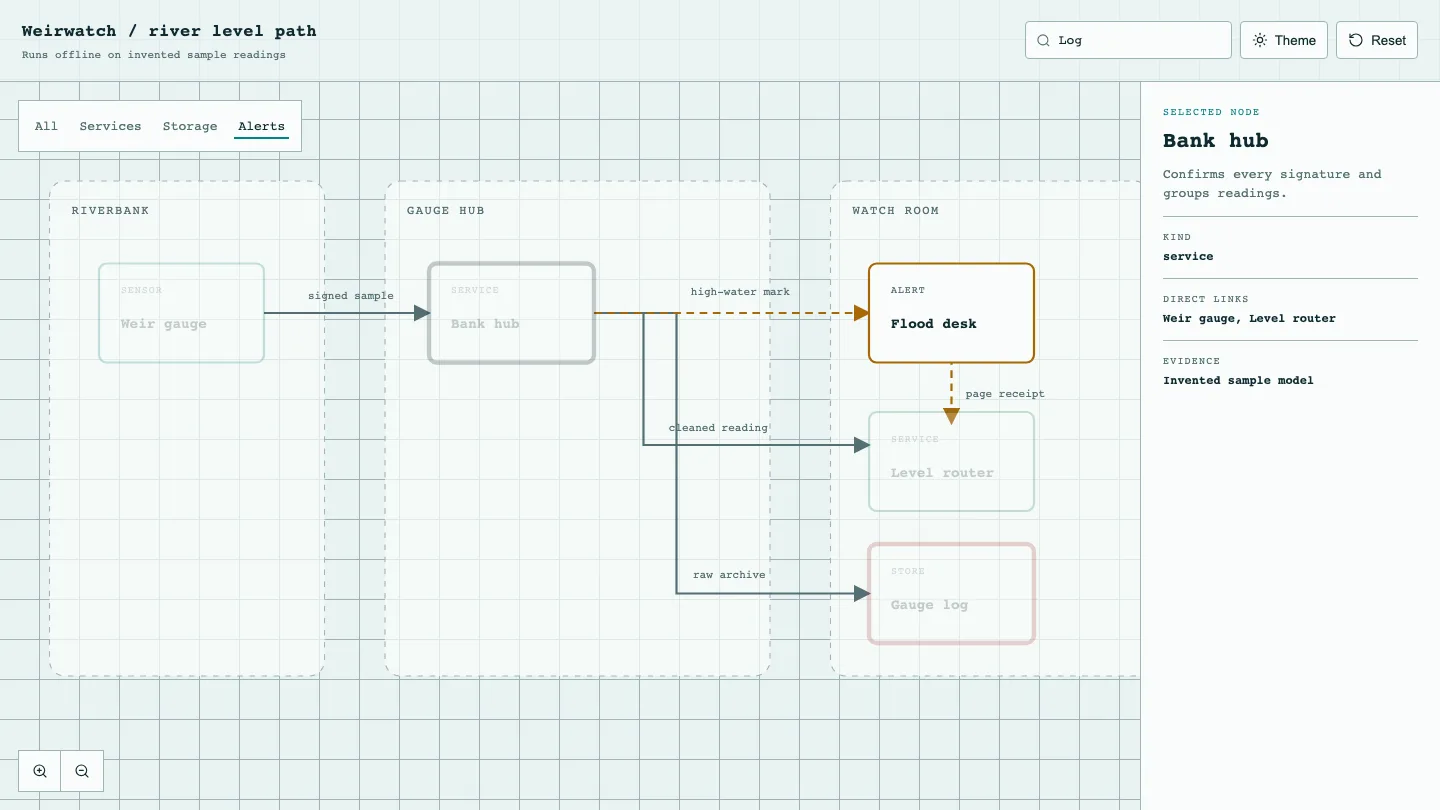
- Keyboard focus, search, bounded zoom, semantic layers and a dossier listing the chosen node and its written links.
- A handoff separating what you provided, what the files showed, what was inferred and what remains unknown.
Good fit
- Architectures, request routes, data flows, workflows or lifecycle states a team has to read the same way.
- Systems you can describe in writing, specify as typed data, or show through a repository you may read.
- Readers who would rather trace the relationships themselves than open a hosted diagram tool.
Not for
- Code audits, capacity planning or production impact claims with no independent evidence.
- Maps where what you can share leaves open which parts exist or how they connect.
- Freehand drawing on an empty canvas, or a diagram editor for several people at once.
About this Skill
Explorable System Map is an architecture diagram skill for Claude Fable 5 that answers one question about a system, workflow, sequence, data flow or lifecycle in a single offline file. The topology makes sense as a still image, and search, focus, semantic layers, zoom and each node's dossier add depth without ever taking that picture away.
How it works
- The agent pins down the question, chooses one diagram grammar and records nodes and edges as typed data with stable ids.
- The main path goes in first, branches attach to the nodes that own them, and each kind gets its own color, shape and wording.
- Search, focus, layers and zoom are added with no relationship hidden, and inside an existing project the map adopts its components and styles.
- Labels, directions, controls, both themes, keyboard use and wide and narrow screens are all tested in a browser, offline, before delivery.
Checked before delivery
- Every node and edge in the model is drawn, each edge leaves and reaches the nodes it names, and its label keeps the protocol or action that matters
- Search, layers, zoom, theme, reset and keyboard selection work with no network request, cookie or storage, at 390 and 1440 px and inside a sandboxed frame
- Each claim is marked as supplied, observed, inferred or unknown, and reachability is never presented as runtime impact
What you need before you start
- You bring
- A system description, an authorized repository or a typed list of nodes and edges · The one question the map has to answer · Trust boundaries, the main path and the exceptions that need to stand out
- Outside costs
- None
- Last tested
- v1.0.0 — Claude Code / Cursor
User reviews
Loading reviews…
FAQ
Can it work from my repository?
Yes, with your permission. The agent reads the code and config you point to, tags each relationship as supplied, observed or inferred, and asks you when the evidence stops rather than filling the gap.
Is a diagram service involved?
No. You get one self-contained HTML file in inline SVG, with no requests, cookies or storage, so it runs offline and in a sandboxed preview.
Will it calculate impact or blast radius?
No. Selecting a node outlines it and lists the links written for it. Reachability is a property of the graph and proves nothing about what breaks at runtime; that takes separate evidence.
Does the download include the demo map?
No. You receive SKILL.md and three reference files. The map shown here was made with them from an invented river-gauge network.