Tile Stage Designer Portfoliov1.0.3
Use this Skill to build a portfolio site.
- Yours to keep: the files stay on your computer.
- Payment by Waffo Pancake, our merchant of record.
- 38 free Skills to try first
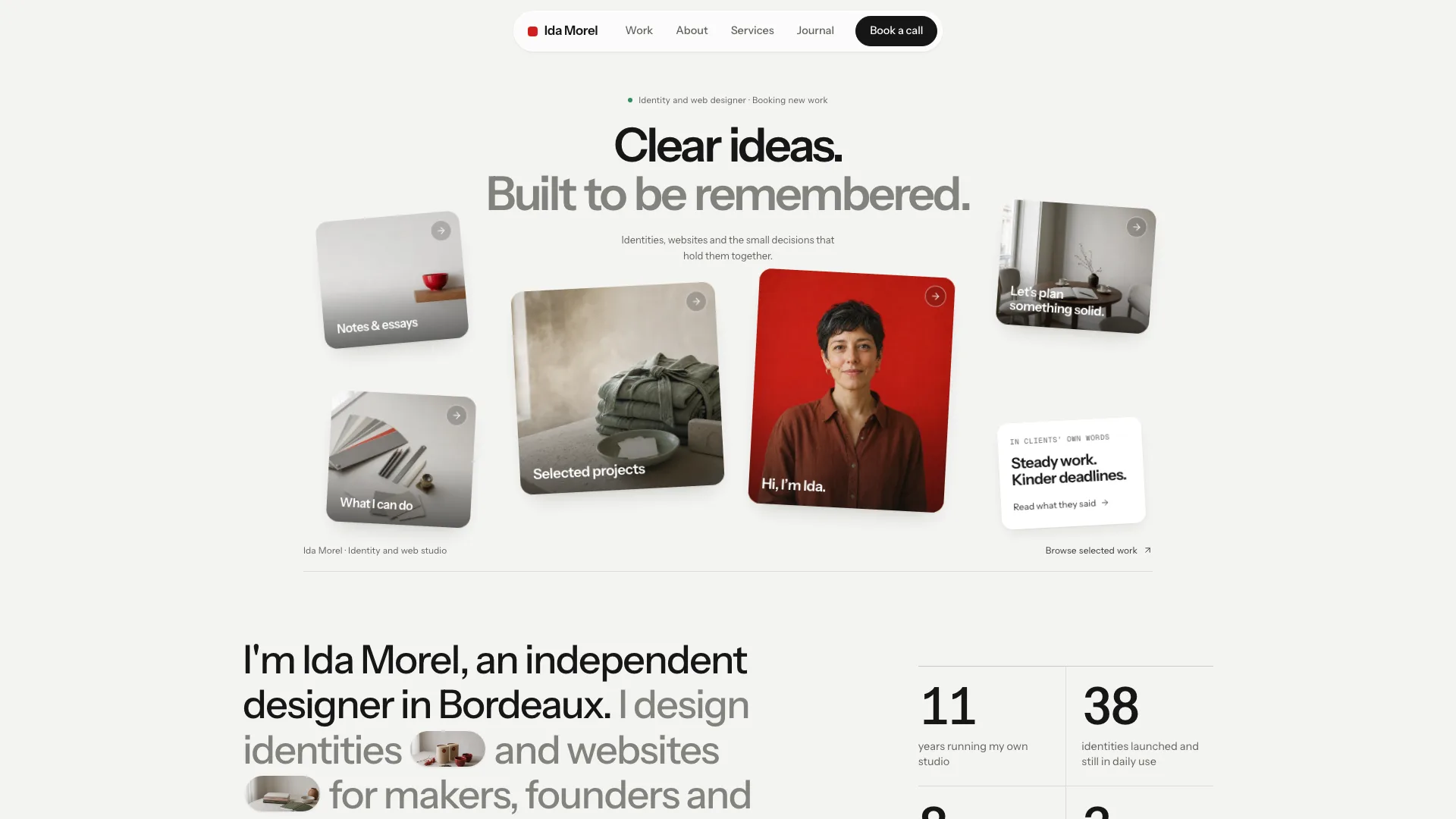
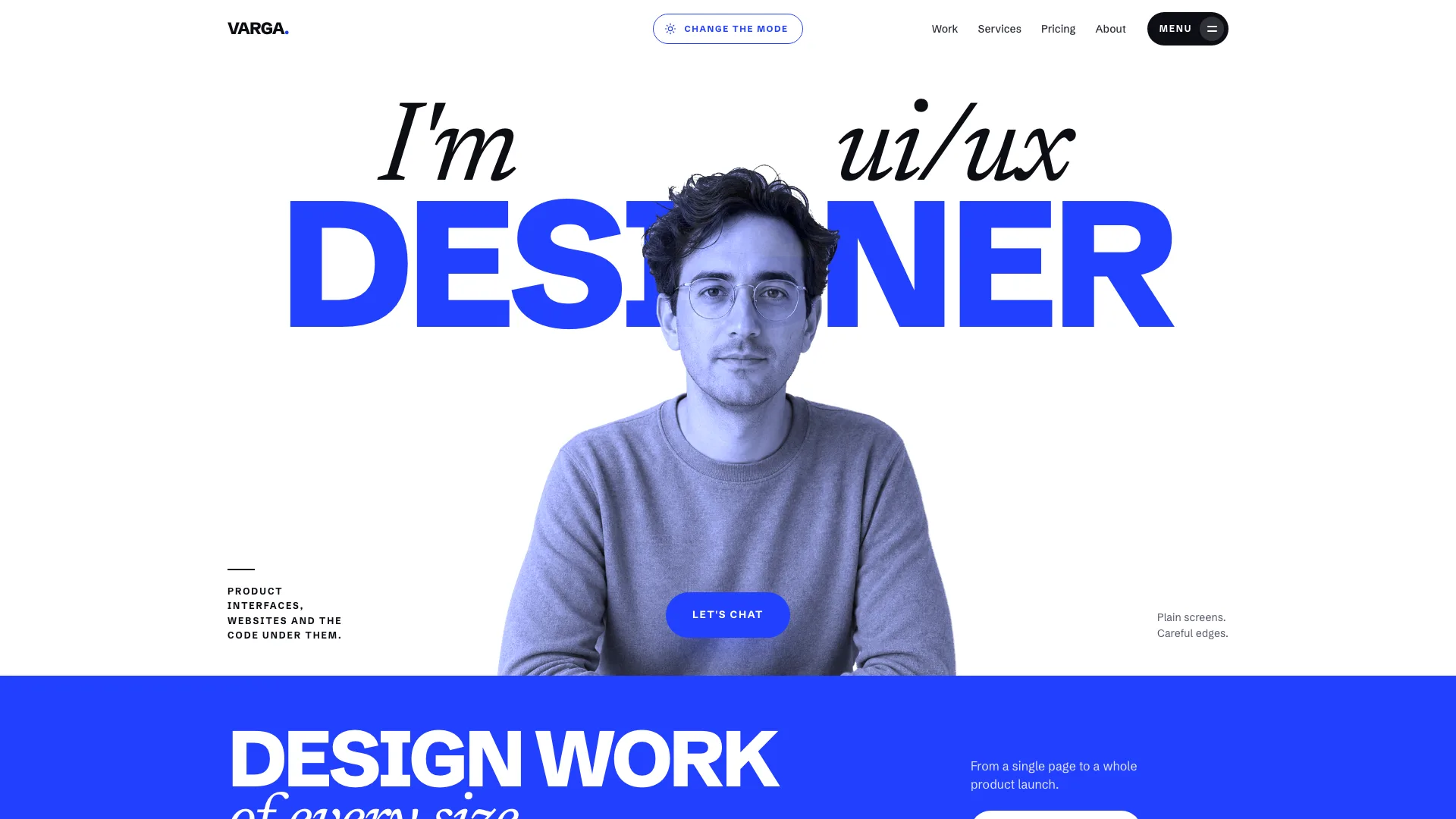
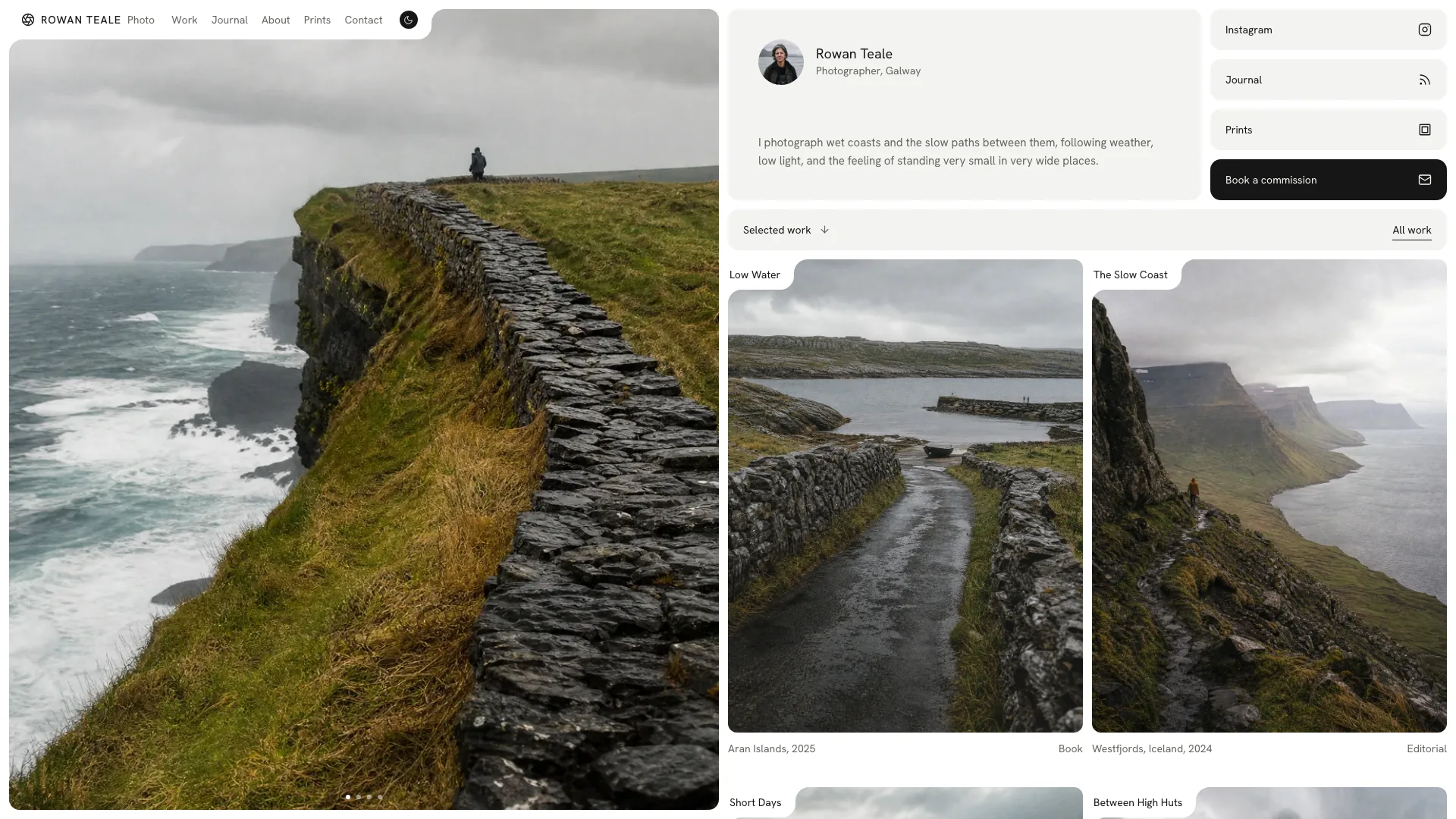
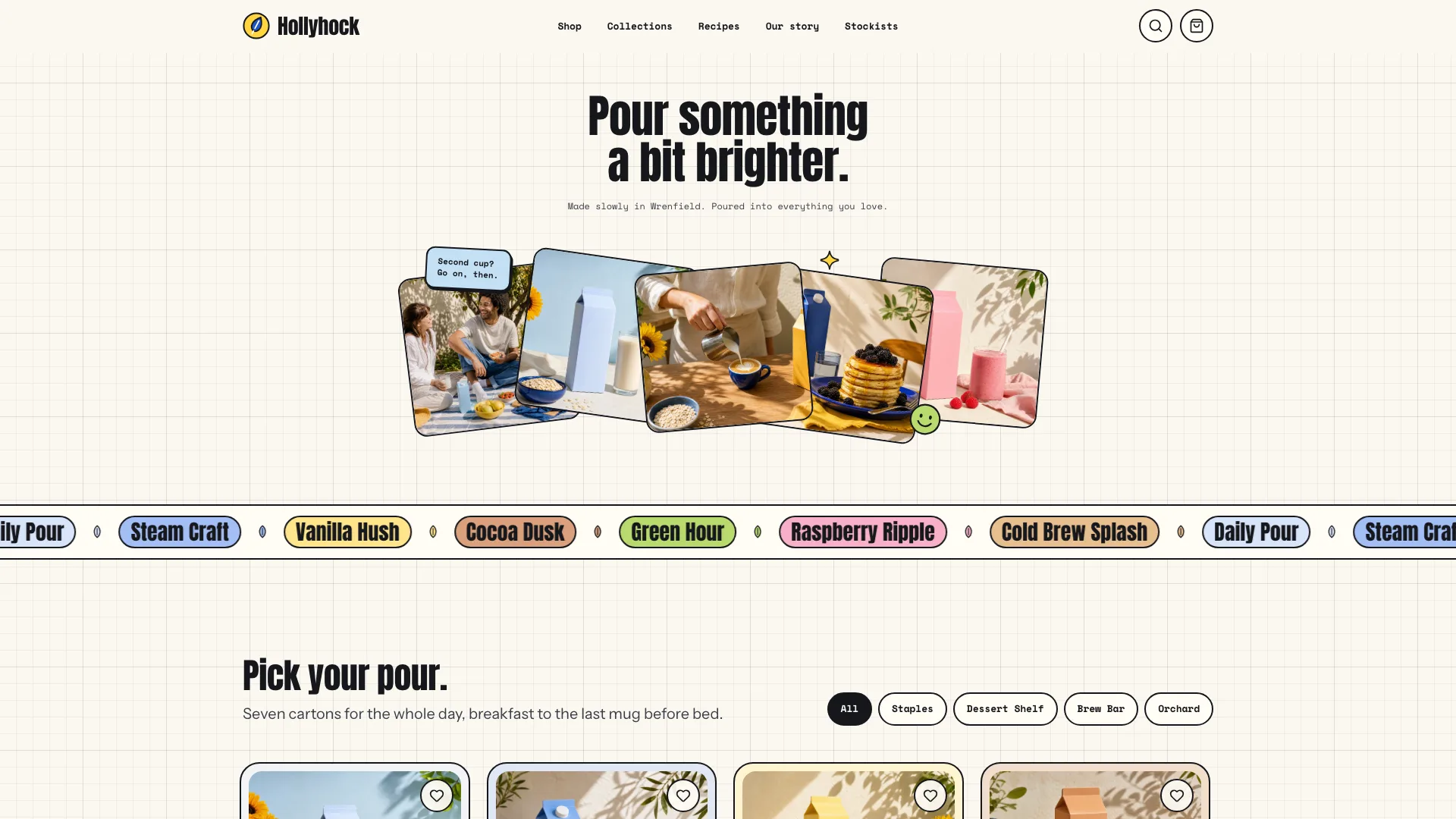
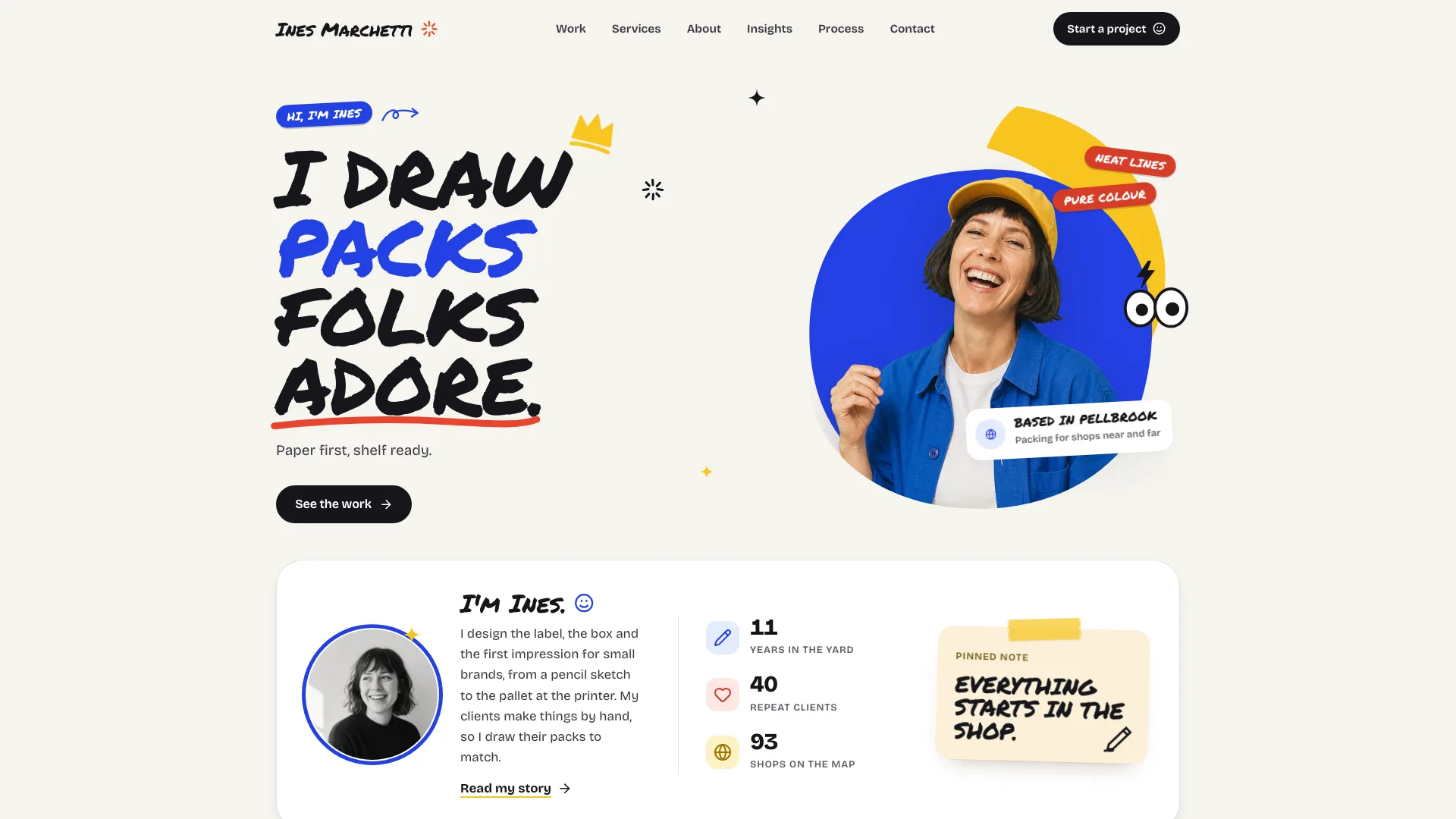
A web design skill for Claude Fable 5 for designer portfolios: a pale grey stage, bento cards drifting round a red portrait tile, a fading second headline line and your name set huge.
Picked most often by
Updated Nov 7, 2026
Preview gallery


Similar Skills
View all
What you get
- A 28-route example built for Ida Morel, an invented designer: the home page, six case studies behind a work index, four service detail pages, about, process, client words, four journal articles, booking, contact, FAQ, newsletter, colophon, privacy and a not-found page.
- The defining look in place: six cards floating on a pale grey stage, a red portrait card, softened second lines, restrained motion that fully respects reduced-motion settings, and a 14-slot picture plan under a single art direction.
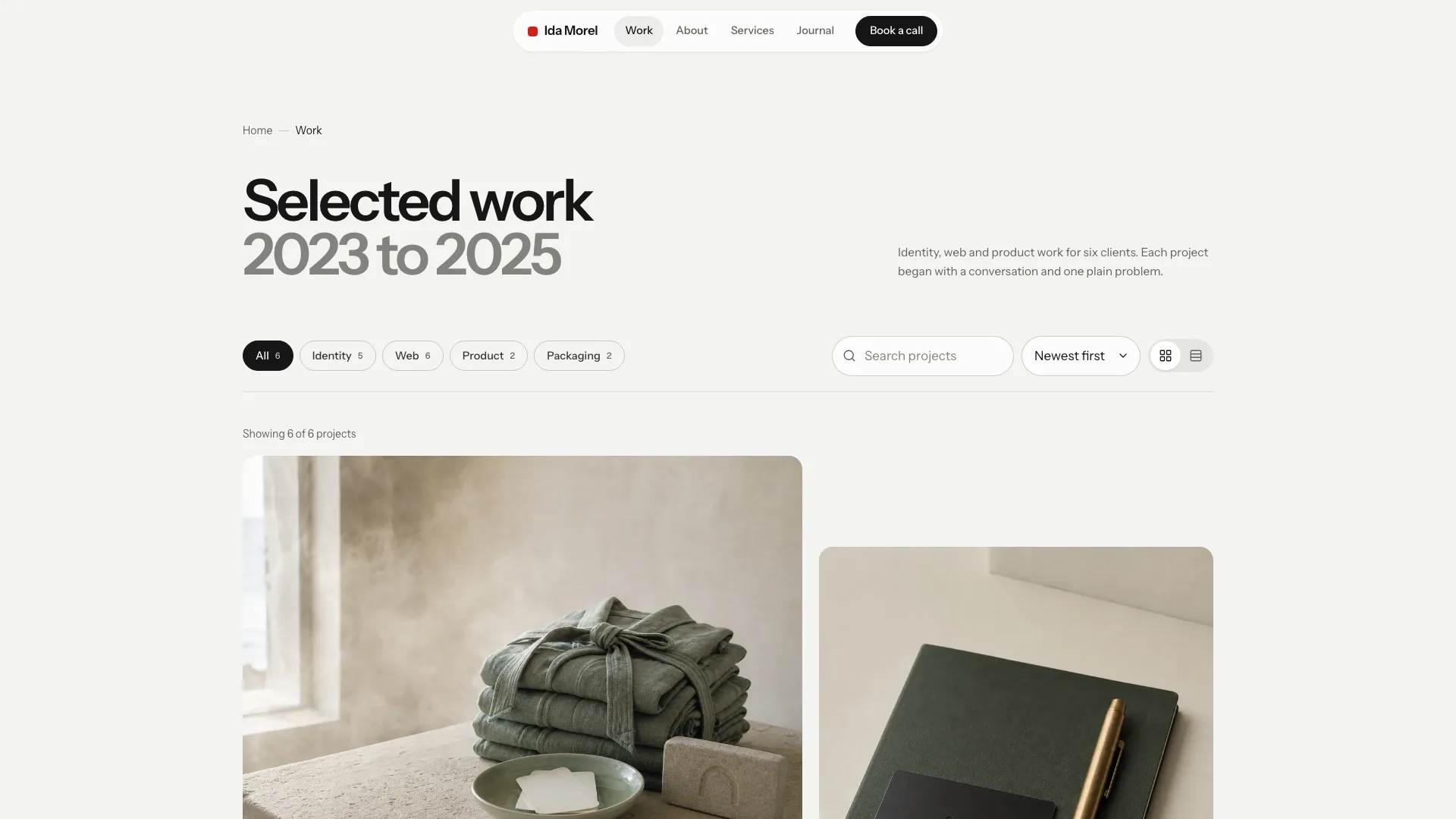
- Interactive parts that already work: discipline chips with search, sorting and a switch between grid and list, tabs for the process, a quote carousel, accordions and copy buttons, a booking picker whose summary updates live, a day picker for retainers and forms showing every state.
Good fit
- Freelance designers in identity, web or product work who want their case studies and services on one site.
- Small studios selling fixed-price projects that want visitors to book a call.
- Photographers and illustrators whose series and packages map onto the same project and service pages.
Not for
- Dark, loud or neon identities; the stage stays pale grey with a single signal red.
- Personal brands that rely on purple, violet or lavender, which the palette excludes completely.
- Receiving bookings or messages straight away: forms confirm in the page until a backend is connected.
About this Skill
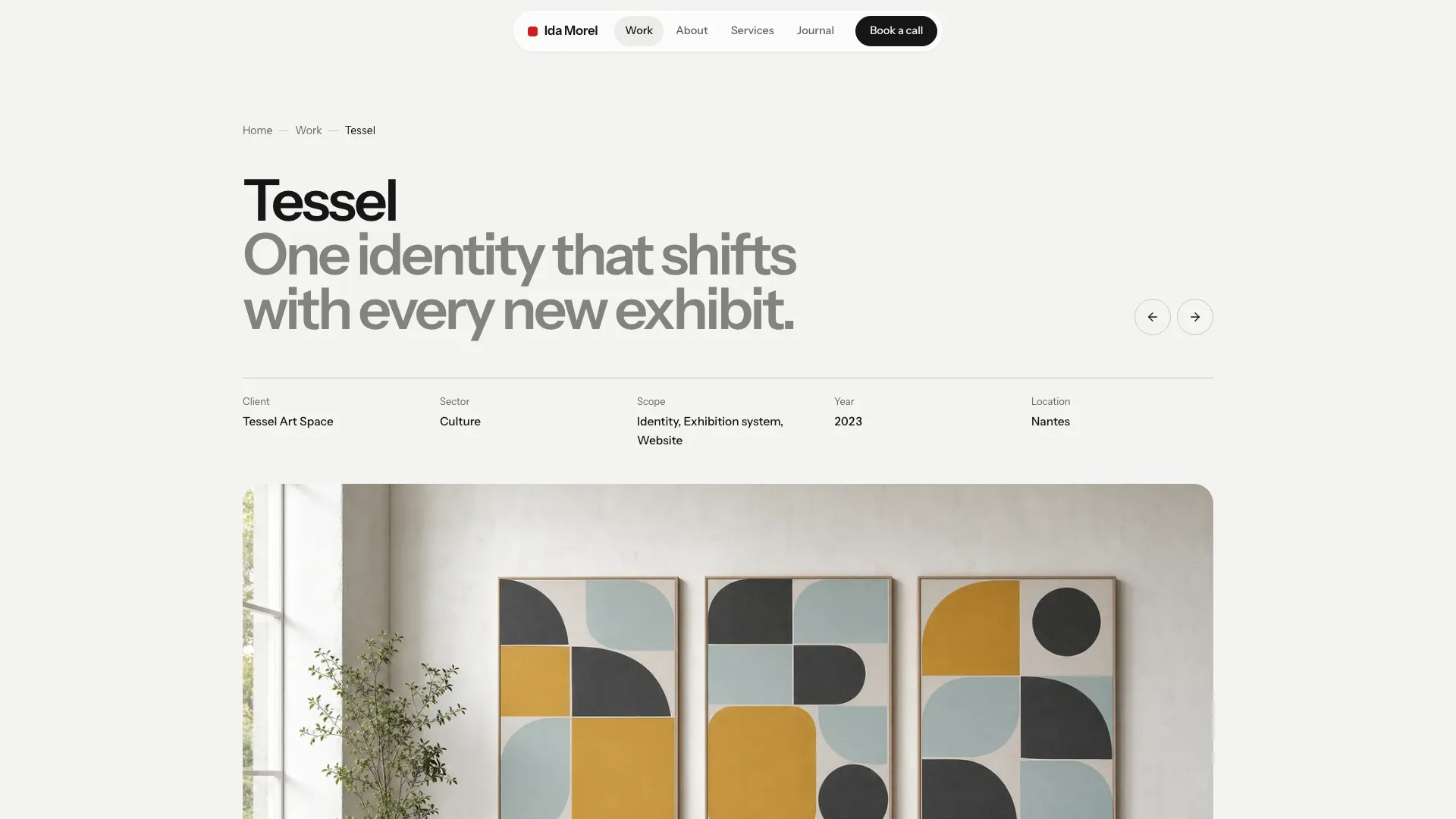
Tile Stage Designer Portfolio is a web design skill for Claude Fable 5 that turns a design practice into one offline portfolio file, or ports it into your framework. Case studies show identity boards, service pages end in a price summary, and the journal, filters, search, sorting, both layouts and the booking picker all work.
How it works
- The agent collects your projects, services, working method, client quotes and articles, or writes drafts in your tone and flags what you need to confirm.
- It fits your work into the collections: a case study for each project, a page for each service, an article for each note, with the example's names swapped out everywhere.
- It plans every picture slot, placing your own portrait on red and your studio photos wherever you provide them.
- It packs a single offline file, runs the validator and checks each route at four widths before handing it over.
Checked before delivery
- validate-design.mjs passes on the built file: one file, no remote requests, one h1 per page, every route, link, shell and collection reference resolves, no sample name left
- Filters, search, sort, tabs, the carousel, accordions, copy buttons, form states, the booking picker and the phone sheet work at 390, 768, 1024 and 1440 px and inside a sandboxed frame
- Clients, quotes, figures and prices are the user's, stand-ins are listed in the closing message, and no award, rating or metric is made up
What you need before you start
- You bring
- Name or studio name, city, the line about availability, a two-line headline and one sentence for the hero, a short biography, facts and contact details · Three to six projects (client, sector, year, place, team, scope, brief, response, deliverables, palette, type note, a quote with its author) and the order Home shows them in · Two to four services (fee, terms, duration, phases, what is included, who it suits), the process phases, frequently asked questions and, if there is writing, one or more articles · Your own portrait on red and a studio photo if the site is real; otherwise the agent's image tool makes stand-ins
- Dependencies
- Node.js 18+ wherever the agent runs, for the script that builds the offline file · A connection during the build, so the three font files are downloaded once and embedded · Optional: an image generator inside the agent for studio shots and project pictures
- Outside costs
- None
- Last tested
- v1.0.3 — Claude Code / Codex / Cursor
User reviews
Loading reviews…
FAQ
What is delivered by default?
A single offline file with fonts and pictures embedded, which works in any browser as well as a sandboxed preview. If you have a framework project or ask for one, the agent ports the design into real components and routes, defaulting to Next.js App Router with TypeScript.
Must the red portrait show me?
On a live site, yes: hand the agent a waist-up portrait, ideally against red. An ordinary portrait can be cut out and placed on the red, and generated faces are placeholders the agent asks you to swap.
Can I show fewer projects or services?
Yes. Three projects or more keep the home bento balanced, two to four services work, and the journal can be dropped completely. The hero always keeps its six cards.