Editorial Team Deckv0.1.4
Use this Skill to make a presentation.
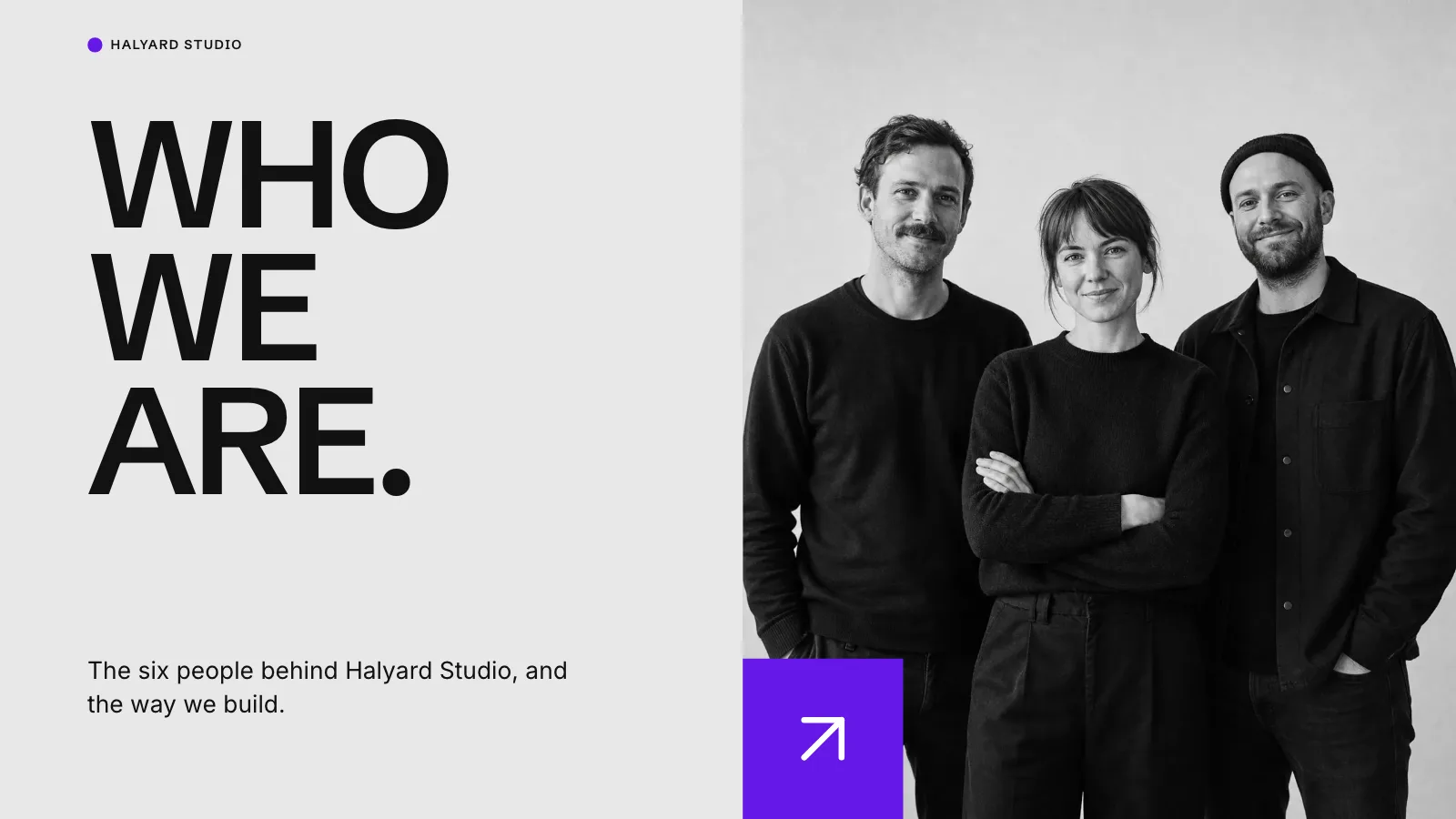
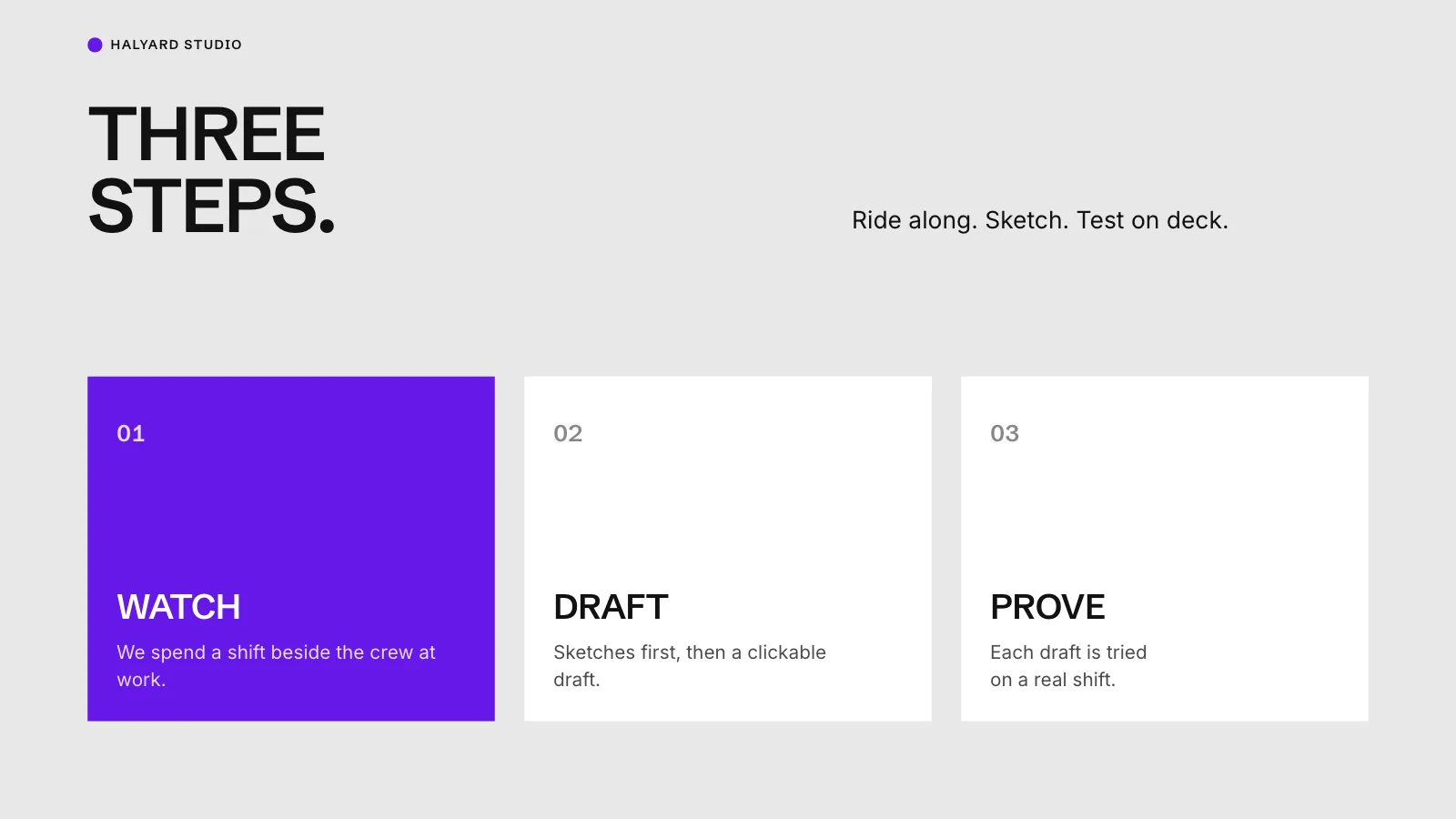
A meet-the-team slide skill for Claude Fable 5: ten pages of black-and-white portraits, heavy capitals, gray and near-black grounds and violet arrow tiles.
Picked most often by
Updated Oct 27, 2026
Preview gallery


 FAL
Similar Skills
View all

What you get
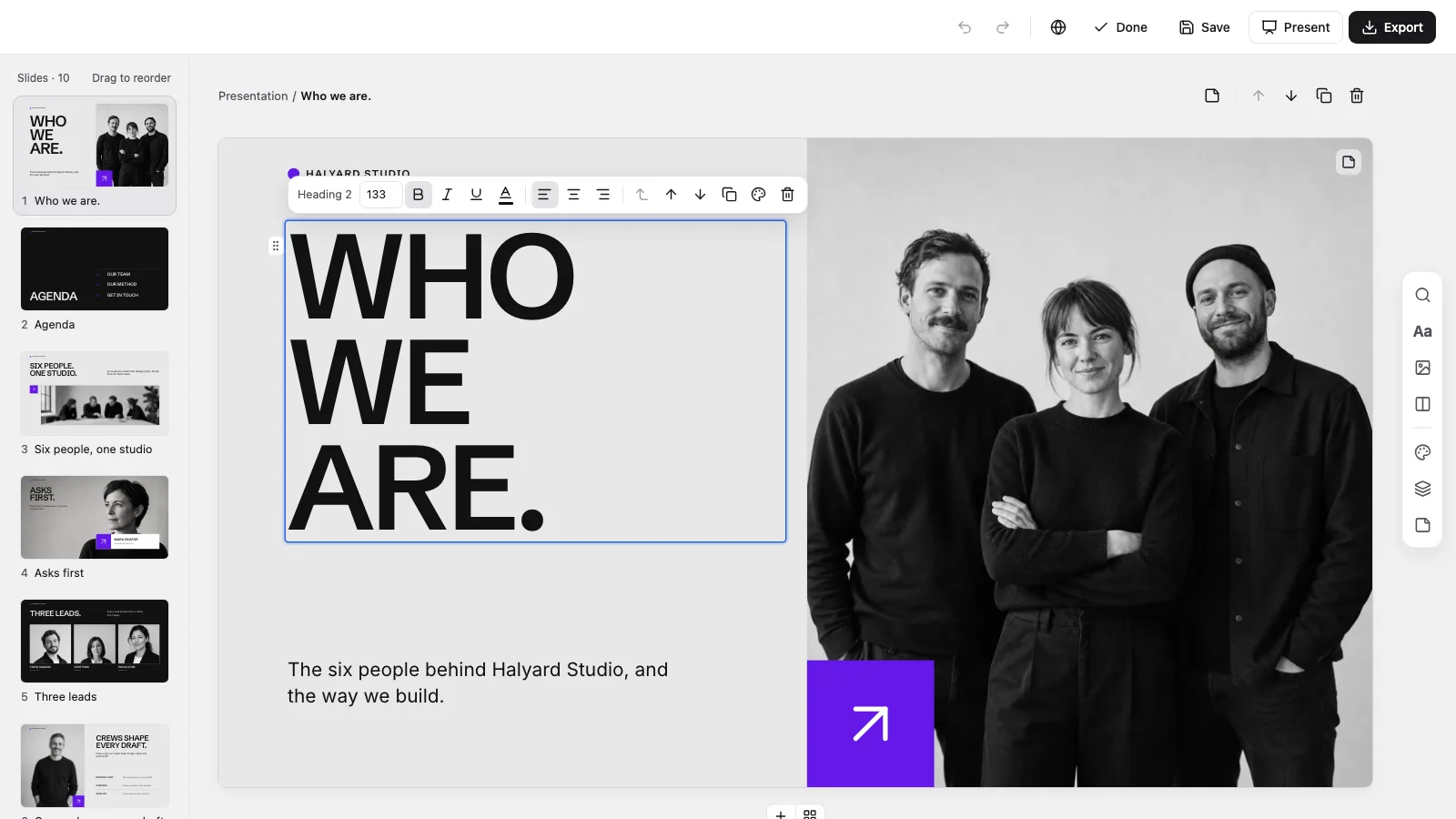
- An offline HTML presentation of 1280×720 pages, kept under 20 MB, that opens to a page view with Edit and Present
- Recipes for ten pages, from the cover and agenda through the studio, one featured person, the leads and a partner to steps, results, rhythm and contact
- Four talking points in each page's notes, so a page holds about 45 words
- Text blocks, portraits, bars and rules that each edit on their own, with Cobalt, Forest and Brick presets as alternatives to the violet
- PowerPoint export from the Export menu, verified by check-pptx.py, plus Print / PDF
- Schibsted Grotesk, Inter and every portrait embedded, so the file fetches nothing
Good fit
- Creative, design and product studios
- Agencies showing a client who will work on the account
- Onboarding for new hires or partners
Not for
- Color portraits: every portrait is black and white
- Showing a large team on a single page
- Reports heavy on data or finance
About this Skill
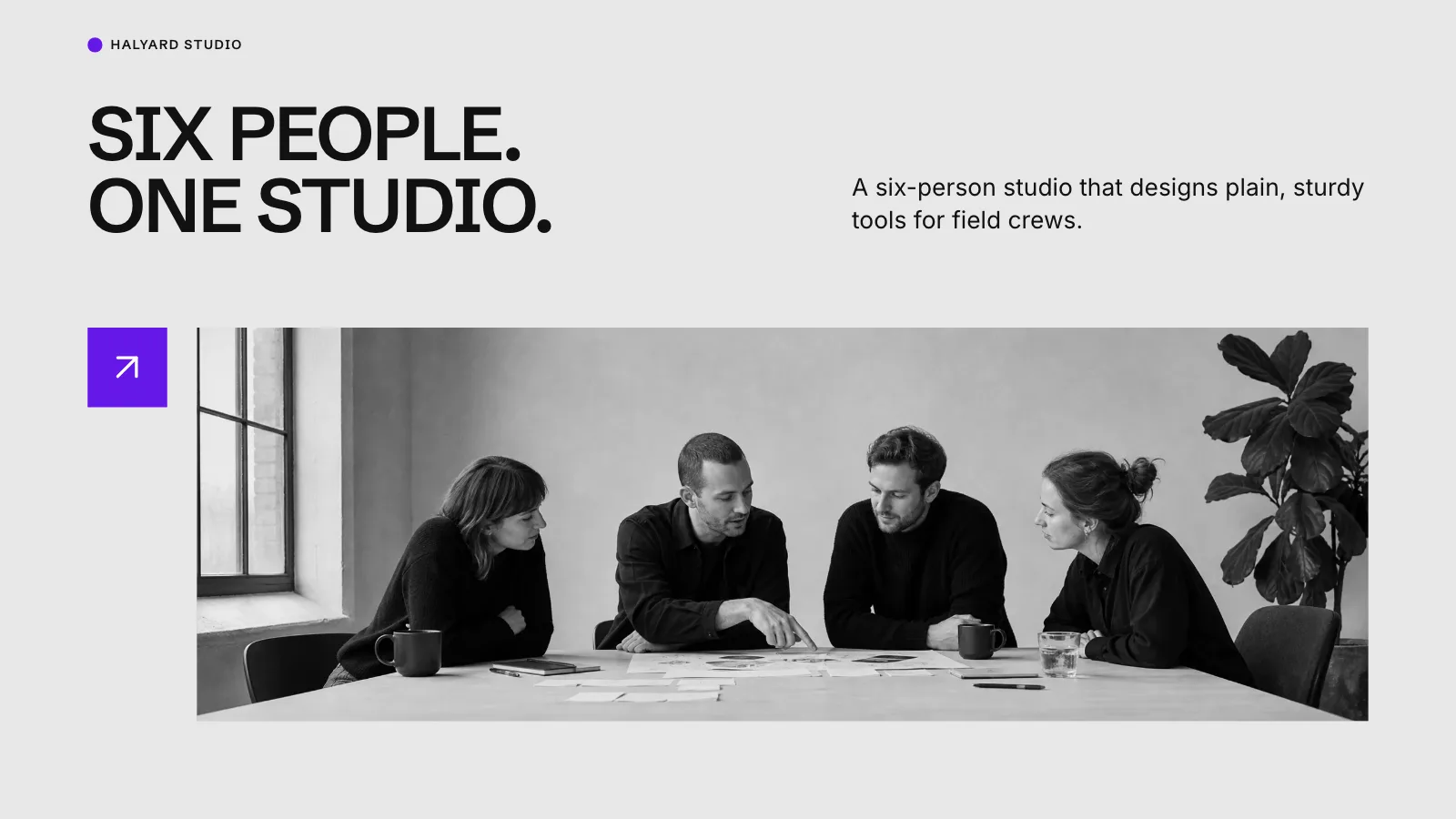
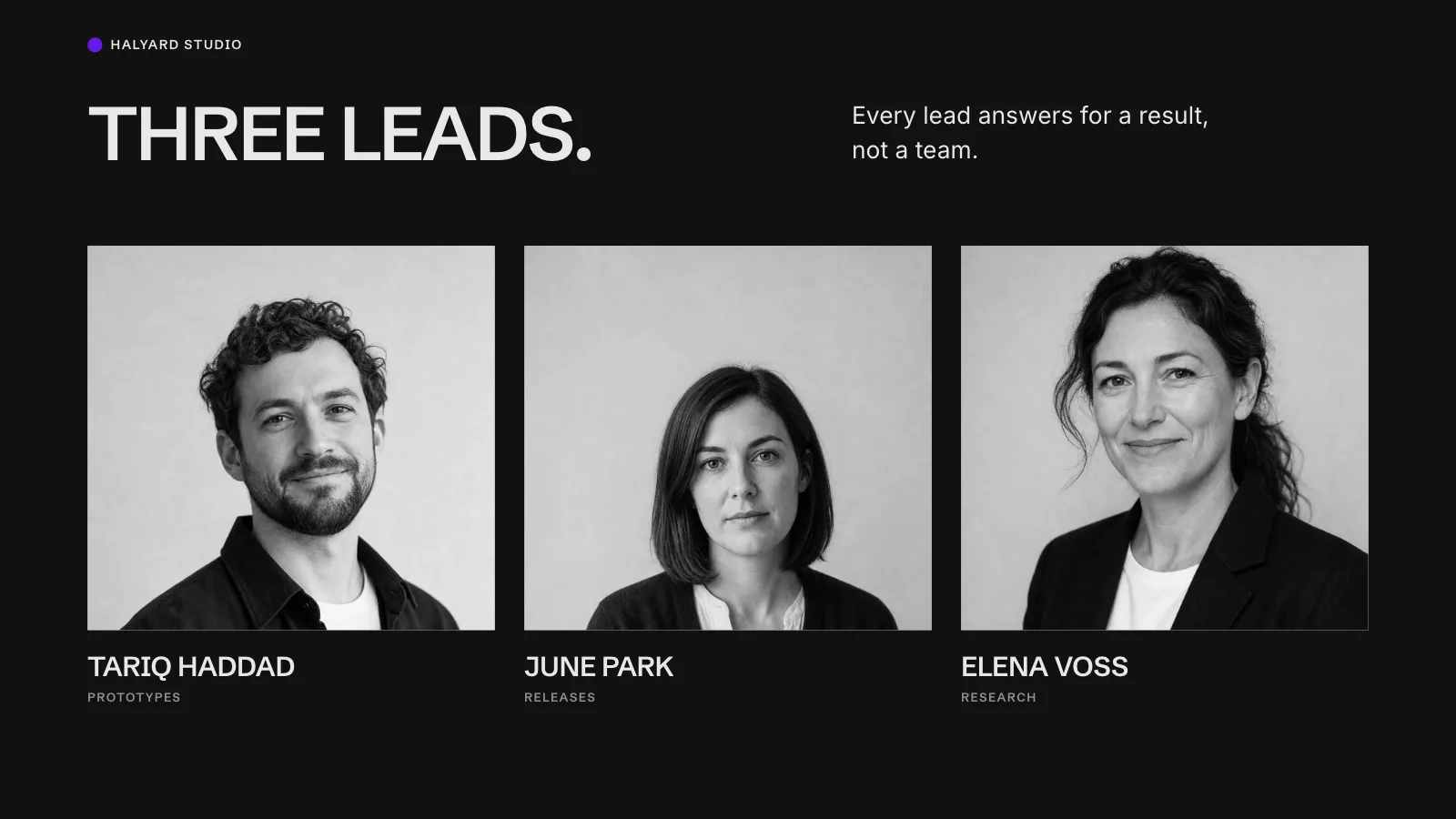
A meet-the-team deck is mostly faces, so portraits lead here, every one black and white in a square frame. Behind them the pages are pale gray, three turn near-black, and titles run in heavy Schibsted Grotesk capitals. Most pages carry a violet tile with a thin arrow, and on two a white name card sits inside the photo. The story moves from an agenda to the studio, one featured person, the leads (three per page), a partner, how work moves, results drawn as bars, the team's working rhythm and the contact page. The handover is one self-contained HTML file, editable in a browser, ready to present, and exportable as PowerPoint or PDF.
How it works
- Agree on the audience, the people to show, how many pages, which language the slides use and the action the deck ends on
- Plan the pages, alternating portrait pages with structured ones, each on its own recipe
- Choose a picture source: the Skill's library first, library plus generated pictures, or all generated, always black and white
- Compose and close out the report: sample text, unfilled frames, any page left without notes
- Build the HTML and check it against the page count and the style kit
- Look at faces in their crops and name cards clear of faces, test editing and Present, then hand it over
Checked before delivery
- check-deck.py passes with the agreed page count and the style kit
- Every page keeps the style's grey and near-black grounds, capital headlines, violet arrow tiles, type sizes and colours
- Every portrait stays black and white
- Every text block, picture, bar and rule stays independently editable
- No example text or pictures left unless the user keeps them
What you need before you start
- You bring
- Team brief: who the people are, what each one owns, how the team works and how to get in touch · Agreed page count and the facts for each page · Optional portraits, or a choice of library pictures or generated ones
- Dependencies
- Python 3 and a recent browser; Node.js 20+ is only needed for library or generated portraits · Works without an API key. Generated pictures are optional, each one billed through your FAL account
- Outside costs
- Optional FAL_KEY for generated pictures
- Last tested
- v0.1.4 — Claude Code / Codex / Cursor
User reviews
Loading reviews…
FAQ
Can the client fix names and roles later?
Yes. Any text block, portrait or shape can be picked out and changed in the browser, and pages can be reordered from the thumbnail rail. Nothing reaches the file itself until someone presses Save (Cmd/Ctrl+S).
We have more than three leads. What happens?
Three people fit on the leads page. Instead of shrinking the portraits, the Skill adds another page built on the same recipe.
Can our own headshots go in?
Yes, ahead of anything else. The style needs black and white, so convert color photos first. No portrait is used on two pages.
Is a PowerPoint version possible?
Yes. Export a .pptx from inside the file; Keynote reads the same file. Text arrives editable, and check-pptx.py holds the export up against the deck before it leaves your hands.